
Sudan
In Sudan, we have worked with Sudanese and international partners on environmental crimes training, climate security, and accountability for conflict-related environmental harm. Our work has focused on strengthening civil society capacity to investigate environmental destruction and on advancing legal analysis of the relationship between climate change, conflict, and international crimes, particularly in Darfur.
Civil Society Training on Environmental Crimes
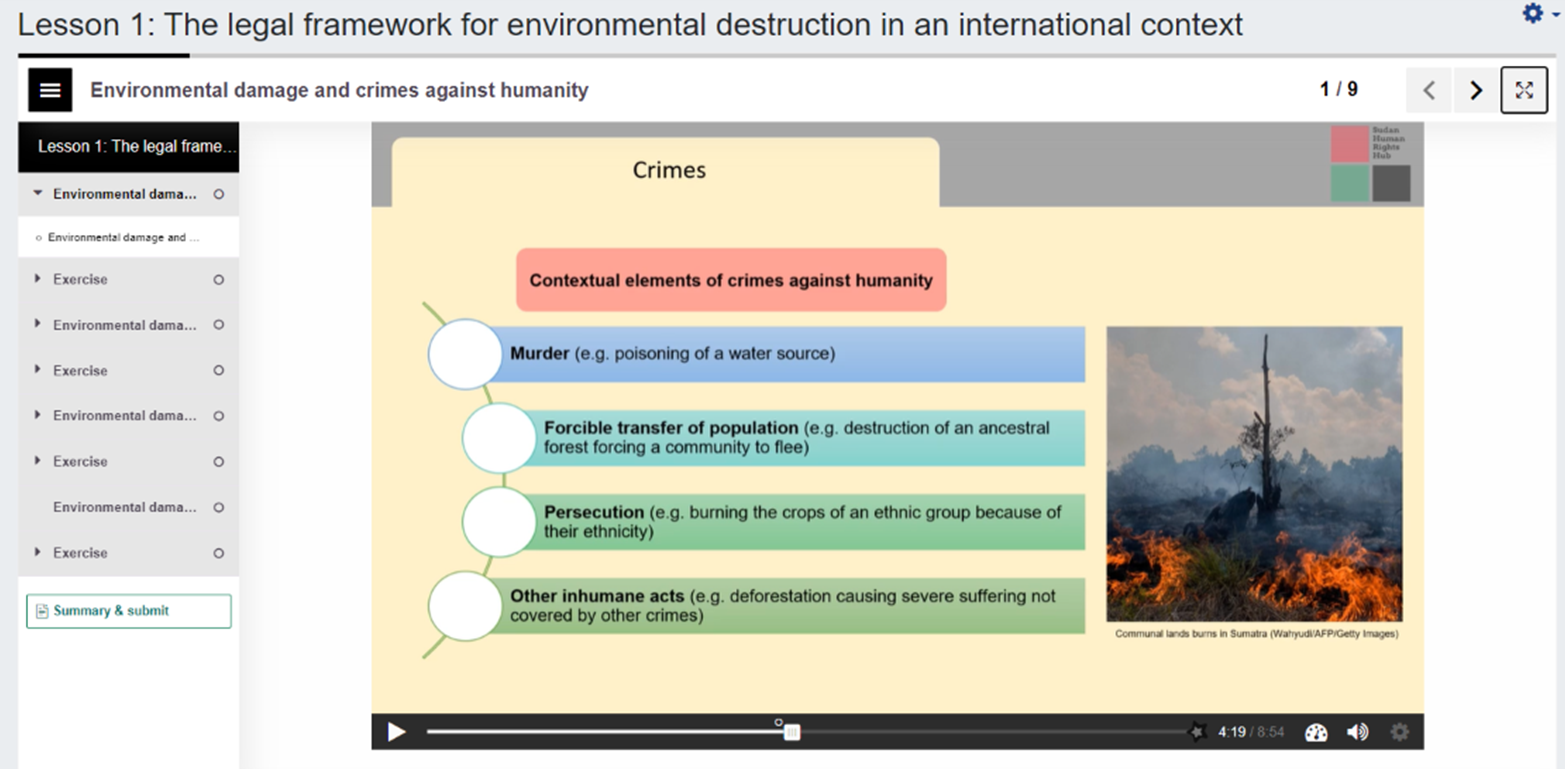
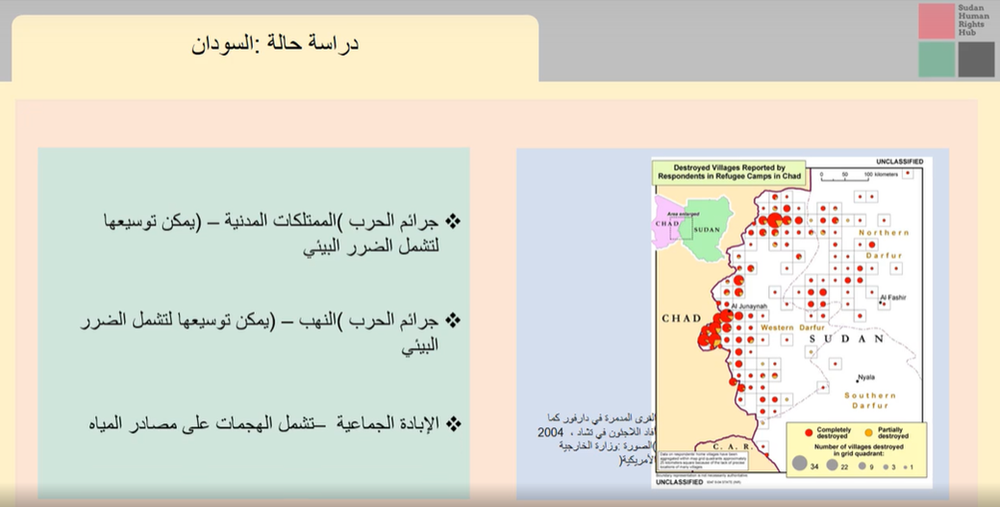
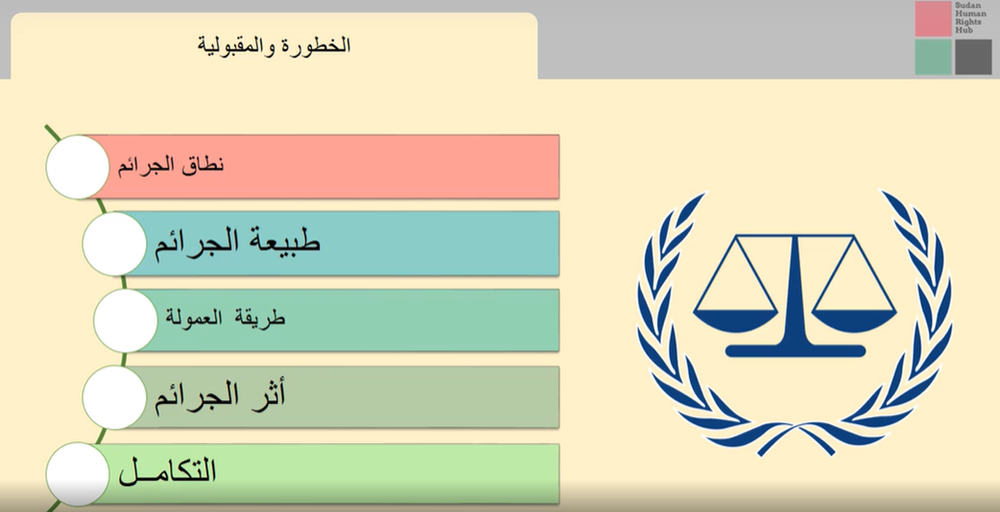
We developed, together with Sudanese and international partners, a digital training course on investigating international crimes associated with the environment. The course covered environmental crimes, investigative techniques, and accountability options available to civil society.
It included practical modules on satellite imagery, geolocation, and social media research, with a focus on accessible methods that can support local documentation of environmental destruction and related abuses.
Climate Security and Darfur
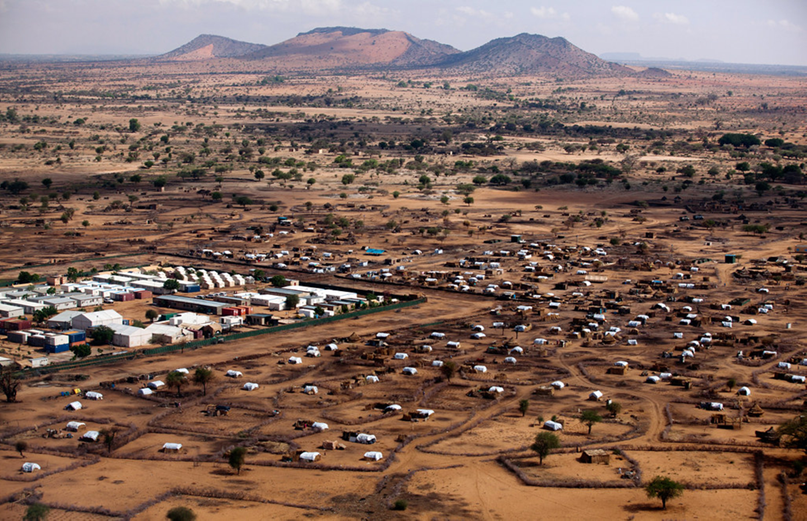
We have examined the relationship between climate change, environmental degradation, and conflict in Sudan, using Darfur as a case study. This work has explored how desertification, pressure on land and water, and the targeting of natural resources can interact with conflict dynamics and contribute to environmental harm.
It has also considered how conflict itself can result in environmental destruction, including the damage or targeting of ecosystems and natural resources, and how these harms may form part of the broader factual context of international crimes.
ICC Advocacy
Together with Sudan Human Rights Hub and Gisa Group, we submitted an open letter to the Office of the Prosecutor of the International Criminal Court titled “Analysing Climate Security and Prosecuting Environmental Atrocity Crimes: Opportunities for the Prosecutor of the International Criminal Court.”
The submission examines how climate-related pressures and environmental destruction can intersect with the commission of international crimes, and sets out legal pathways through which the Office of the Prosecutor may address such harms within the framework of the Rome Statute.